


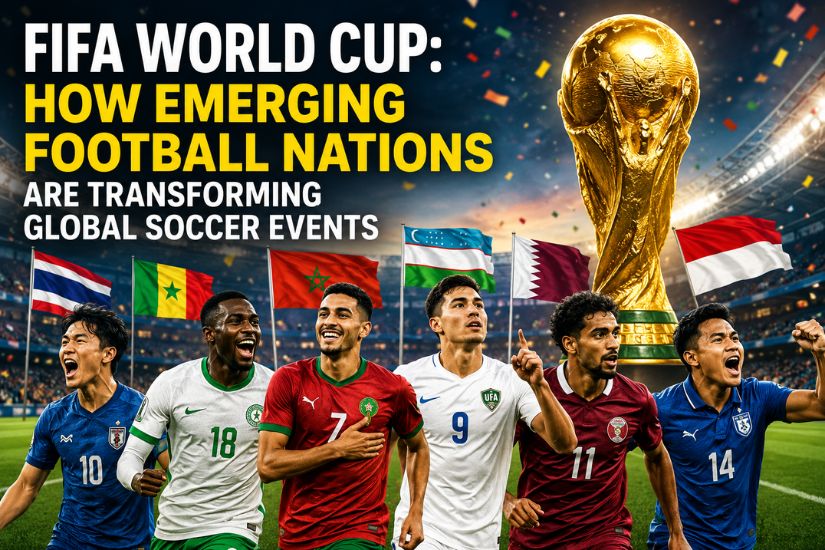
The FIFA World Cup 2026 marks a historic moment in international football. With an expanded format featuring 48 teams and matches hosted across the United States, Canada, and Mexico, the tournament promises to be the biggest World Cup ever held.
Beyond the excitement surrounding football’s most prestigious competition, the tournament also shines a spotlight on emerging football nations that are steadily closing the gap with traditional powerhouses. As global soccer events continue to expand their reach, new teams are gaining opportunities to compete, inspire fans, and reshape the international football landscape.
In this article, we’ll explore how the FIFA World Cup 2026 is changing the game, why emerging football nations matter more than ever, and what fans can expect from the future of global football.
The Historic Expansion of the FIFA World Cup 2026
The FIFA World Cup 2026 introduces one of the biggest structural changes in tournament history.
A 48-Team Tournament
For the first time, 48 national teams will compete instead of the traditional 32. This expansion provides:
- More qualification opportunities
- Greater continental representation
- Increased global fan engagement
- More competitive international football
The larger tournament allows countries that previously struggled to qualify to showcase their talent on football’s biggest stage.
Three Host Nations
The tournament will be jointly hosted by:
- United States
- Canada
- Mexico
This is also the first World Cup hosted by three countries, offering world-class stadiums, improved infrastructure, and a truly continental football festival.
Why Emerging Football Nations Matter
Football has become increasingly competitive worldwide. Nations once considered underdogs are now producing talented players, experienced coaches, and organized football development systems.
Improved Youth Development
Many emerging football nations have invested heavily in:
- Youth academies
- Coaching education
- Sports science
- Modern training facilities
These investments are producing technically gifted players capable of competing with elite football nations.
Increased International Experience
Players from developing football nations now compete in Europe’s top leagues, gaining valuable experience before representing their national teams.
This exposure has significantly improved the overall quality of international football.
How Global Soccer Events Are Becoming More Competitive
The growth of football worldwide has transformed major international tournaments.
More Balanced Competition
Gone are the days when only a handful of nations dominated every competition.
Today’s global soccer events regularly feature surprise results as smaller nations defeat established football giants.
This unpredictability makes tournaments more entertaining for fans around the world.
Tactical Evolution
Modern football emphasizes:
- Intelligent pressing
- Flexible formations
- Data-driven analysis
- Quick transitions
- Technical versatility
Emerging football nations have embraced these innovations, allowing them to compete with traditionally stronger teams.
Benefits of the Expanded FIFA World Cup 2026
The new tournament structure offers advantages for players, fans, and football associations.
Greater Global Representation
More countries participating means:
- Increased diversity
- New football stories
- Broader fan engagement
- Greater international exposure
Fans will discover exciting teams and talented players they may not have previously followed.
Economic Opportunities
Hosting and participating in major tournaments generates benefits including:
- Tourism growth
- Infrastructure development
- Commercial investment
- Broadcasting revenue
- Local business opportunities
The FIFA World Cup 2026 is expected to become one of the largest sporting events ever organized.
Rising Emerging Football Nations to Watch
Several countries have shown remarkable progress over the past decade.
Morocco
Morocco demonstrated that disciplined tactics and technical quality can challenge the world’s best teams, inspiring football development across Africa.
Japan
Japan continues producing technically excellent players while consistently competing at the highest international level.
South Korea
South Korea combines tactical discipline with athletic intensity, making them dangerous opponents in every major tournament.
Canada
As one of the host nations, Canada has rapidly improved thanks to investment in youth development and increasing player representation in Europe’s top leagues.
Senegal
Senegal remains one of Africa’s strongest football nations, consistently producing elite talent capable of competing globally.
Technology Is Changing Global Soccer Events
Technology now plays an essential role in modern football.
Key innovations include:
- Video Assistant Referee (VAR)
- Goal-line technology
- Performance analytics
- GPS player tracking
- AI-assisted match analysis
These tools improve fairness while helping teams optimize performance.
Fan Experience During FIFA World Cup 2026
The 2026 tournament aims to deliver an unforgettable experience for supporters worldwide.
Fans can expect:
- Modern stadiums
- Enhanced digital experiences
- Interactive fan zones
- Improved transportation
- Expanded global broadcasting coverage
Digital platforms will also allow supporters to engage with matches through live statistics, behind-the-scenes content, and interactive features.
Challenges Facing Emerging Football Nations
Despite significant progress, many developing football countries still face obstacles.
Common challenges include:
- Limited funding
- Infrastructure gaps
- Smaller domestic leagues
- Player retention
- Coaching development
Continued investment remains essential for long-term success.
The Future of International Football
The FIFA World Cup 2026 represents more than an expanded tournament.
It symbolizes football’s evolution into a truly global sport where opportunities extend beyond traditional football powers.
As emerging football nations continue improving, future global soccer events are likely to become even more competitive, unpredictable, and exciting.
Fans can expect new rivalries, breakthrough stars, and unforgettable moments that reflect football’s growing popularity across every continent.
Frequently Asked Questions (FAQ)
The FIFA World Cup 2026 will feature 48 teams for the first time and will be jointly hosted by the United States, Canada, and Mexico.
Improved youth development, better coaching, modern training methods, and increased international player experience have significantly strengthened many developing football nations.
The expansion allows more countries to participate, increases worldwide fan engagement, and creates greater opportunities for competitive international football.
Countries such as Morocco, Japan, South Korea, Canada, and Senegal have shown impressive progress and are expected to perform strongly in future international tournaments.
Technologies like VAR, goal-line technology, player analytics, and advanced performance tracking will improve officiating accuracy and team preparation.
Global soccer events are international football tournaments involving national teams or clubs, including the FIFA World Cup, continental championships, and other major competitions.
Yes. With more participating countries, expanded broadcasting, and greater international representation, the tournament is expected to attract a record global audience.
It creates more opportunities for developing football nations, encourages worldwide investment in the sport, and strengthens football’s position as the world’s most popular game.
Conclusion
The FIFA World Cup 2026 is set to redefine international football. With more participating nations, broader global representation, and unprecedented fan engagement, the tournament reflects the continued growth of the sport worldwide.
The rise of emerging football nations demonstrates that investment, development, and determination can transform international competition. Combined with the evolution of global soccer events, the future of football has never looked brighter.
Whether you’re a lifelong supporter or a new fan, the FIFA World Cup 2026 promises to deliver history, excitement, and unforgettable stories that will shape football for generations.